

How Jet Parts Engineering Built an AI-Powered Document Workflow in 8 Weeks
BERPs used to take 30-60 minutes of focused sales time. An 8-week sprint cut that in half and unlocked parallel processing.
Quick Overview
- Client
- Jet Parts Engineering
- Industry
- Aerospace Parts Distribution
- Challenge
- Manual BERP document assembly consuming 30-60 minutes per package and up to 50% of inside sales team capacity, limiting pursuit of new opportunities.
- Solution
- 8-week Quick Win in a Box sprint, pivoting from a desktop AI copilot to a hybrid Python + AI architecture that paired subject matter experts with technical operators.
- Date
- March 2026
Key Results
- 50% reduction in BERP creation time (verified)
- Parallel processing of multiple BERPs at once
- Consistent output via deterministic templates
- JPE owns and maintains the system internally
Executive Summary
Jet Parts Engineering (JPE) is an aerospace aftermarket company that designs, manufactures, and distributes FAA-approved alternative parts for commercial aviation. Getting a customer to approve a new part involves extensive technical documentation. JPE's Inside Sales team was spending up to half their day assembling Basic Engineering Review Packages (BERPs), the detailed packages required before an airline or MRO will approve a new component. Each package took 30-60 minutes of focused work, limiting the team's ability to pursue new opportunities and follow up on pending approvals.
JPE partnered with GSD at Work for an 8-week sprint with a clear target: cut BERP creation time in half. The first approach, an AI desktop copilot, showed promise but hit real-world limitations around formatting accuracy and processing large engineering PDFs. Rather than scale back the goal, the JPE team adapted. Their BI Analyst built a hybrid system combining Python scripts for reliable data extraction with AI for orchestration and edge-case handling.
The result: BERP creation time dropped to roughly 15 minutes of review, the team demonstrated the ability to process multiple packages at once, and JPE now owns the system internally. The freed-up capacity is being redirected toward customer engagement and pipeline development.
About Jet Parts Engineering
Jet Parts Engineering (JPE) is a leading provider of PMA parts, DER repairs, and MRO services for commercial aircraft. Through an integrated family of specialized companies, JPE delivers FAA-approved solutions across engine, pneumatic, hydraulic, fuel, interior, and landing gear systems to airlines and MROs worldwide. Headquartered in Seattle, WA, with operations across North America, Europe, and Asia, JPE serves the world's largest carriers with engineering-driven solutions that lower total cost of ownership, shorten lead times, and improve fleet availability.
The Challenge
A Basic Engineering Review Package (BERP) is central to how JPE brings its engineered parts to market. When an Outside Sales Rep identifies an opportunity with an airline or MRO, the Inside Sales team assembles a BERP. Until that package is submitted and approved by the customer's engineering team, JPE cannot sell the part.
The legacy process was slow and manual:
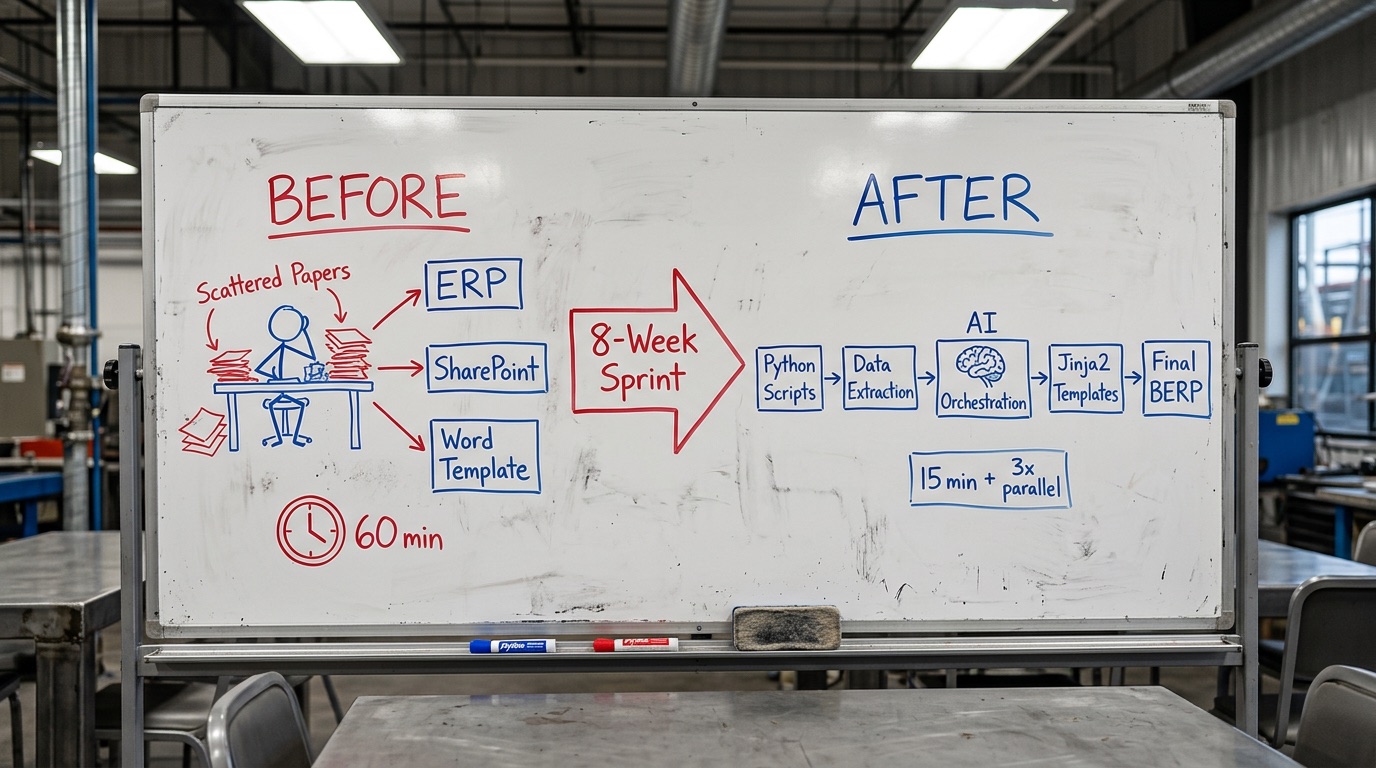
- Time-Intensive Assembly: A single BERP took 30-60 minutes. Reps pulled data from their ERP, ran a Word mail merge, then searched SharePoint for the correct engineering Certification Data Letters (CDLs).
- Manual Data Extraction: Reps copied technical text, FMEA tables, and engineering drawings from PDF CDLs into customer-specific Word templates by hand.
- Capacity Drain: BERP assembly consumed roughly 50% of the Inside Sales team's daily time.
- Downstream Delays: With so much time spent on document assembly, reps had less bandwidth for customer follow-up, contributing to extended approval timelines.
The Opportunity
JPE's leadership saw a straightforward path: if they could speed up BERP assembly, the team could respond to more customer inquiries, submit packages faster, and spend more time on relationship-building and follow-up. That combination of speed and capacity was the business case for the engagement.
The Approach
GSD at Work structured the engagement as a Quick Win in a Box: an 8-week sprint (December 15, 2025 to February 9, 2026) with a pre-agreed success metric of 50% reduction in BERP creation time, verified by JPE's own team.
In the first two weeks, GSD at Work and JPE mapped the BERP workflow with the Inside Sales Manager, who served as the Subject Matter Expert (SME). The starting plan was to equip her with the Claude Desktop app, connect it to SharePoint via the Microsoft 365 MCP connector, and use Wispr Flow (a voice dictation tool) so she could verbally direct the AI to assemble documents.
The goal was to create a reusable AI "Skill," a set of instructions that would let Claude read CDL PDFs, pull the right text and images, and produce a near-final Word document.
The Pivot: From Desktop Copilot to Hybrid Architecture
By Week 4, the desktop copilot approach had shown what AI could do and where it fell short. Claude handled complex tasks well, like pulling engineering images from PDFs. But it wasn't reliable enough for production use.
Where the desktop approach broke down:
- Timeouts: Large engineering PDFs pushed the Claude Desktop app past its context limits, causing mid-task failures.
- Formatting issues: The AI got the data right but took liberties with layout. Headings, logos, and tables didn't land where they should.
- Compounding errors: As the BI Analyst put it: "If AI is 95% accurate... each time it makes a decision it's going to be 95%. And that goes down very quickly."
How JPE adapted:
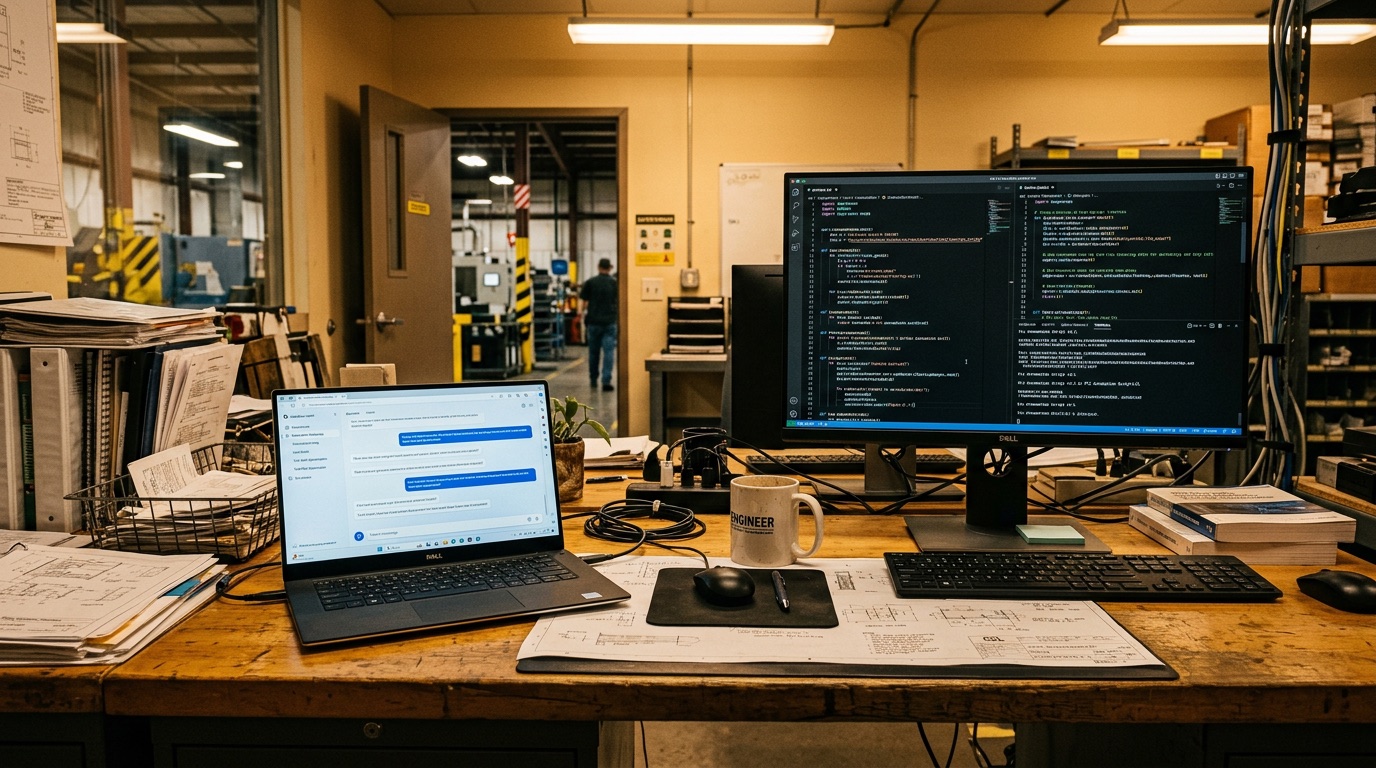
JPE's BI Analyst stepped into a "Technical Operator" role, moving the workflow from the Claude Desktop app into Claude Code, a CLI tool running in a local repository. The team rebuilt the system around a simple principle: let AI orchestrate; let code execute.
The BI Analyst wrote Python scripts using Jinja2 templates to handle the predictable parts (pulling ERP data, running the mail merge, extracting text and images from PDFs). AI handled what it's good at: orchestrating the scripts, managing edge cases like non-standard legacy parts, and evaluating outputs against known-good examples.
This eliminated formatting problems and kept all data within JPE's own infrastructure.
Implementation: Week by Week
Weeks 1-2: Discovery and Baseline
The team documented exactly how an ISR builds a BERP: every click, copy-paste, and mental check. Baseline: 30+ minutes per document. They introduced Wispr Flow so ISRs could dictate their process knowledge into the AI, capturing the small judgment calls that are hard to write down.
Weeks 3-4: Testing the Desktop Copilot
The Inside Sales Manager ran live BERPs through Claude Desktop. The AI could extract data from engineering documents, but getting it to produce a correctly formatted Word document required too much manual cleanup.
Weeks 5-6: JPE Builds the Hybrid System
The BI Analyst took over the technical work. Using Claude Code, he built a modular application: Azure integration for SharePoint access, ERP data routed through Power BI, and Python-based extraction tools. All of it ran on JPE's existing infrastructure. This was JPE's build, designed to be maintained and extended by their own team.
Weeks 7-8: Refinement and Handoff
The SME tested the new outputs and provided feedback to tighten the extraction logic. With the heavy lifting handled by code, she was able to process multiple packages at once. By the final week, the team was training additional Inside Sales Reps on the new workflow.
Results & Impact
By the end of the sprint on February 9th, 2026, JPE had met and exceeded the original target:
- 50% Reduction in BERP Creation Time (Verified): Active human time per BERP dropped from 30-60 minutes to roughly 15 minutes of review and final handling. The SME confirmed the target was met after processing multiple BERPs with the new system.
- Parallel Processing: The deterministic architecture removed the need to babysit each document. The SME processed multiple BERPs at once: "I did three BERPs at once... and the amount of changes I had to do was very minimal."
- Consistent Output: Jinja2 templates and Python scripts eliminated the formatting variability of the old manual process. The BI Analyst noted: "We were able to essentially achieve 100% consistency, at least with what it's told to do."
- Internal Capability: JPE now owns and maintains the system. The BI Analyst can build and extend AI-orchestrated workflows independently, and the ISR team has developed practical AI skills.
- Freed Sales Capacity: With BERP creation taking half the time, the Inside Sales team has reclaimed hours each week for customer follow-up and pipeline work.
Before & After
| Dimension | Before | After |
|---|---|---|
| BERP creation time | 30-60 min of focused work | ~15 min of review |
| Processing mode | Sequential, one at a time | Multiple packages in parallel |
| Field consistency | Variable (manual copy-paste) | Consistent (deterministic templates) |
| ISR time spent on BERPs | ~50% of daily capacity | ~25% of daily capacity |
| Hands-on effort | Constant throughout | Review and approve |
What This Means for the Business
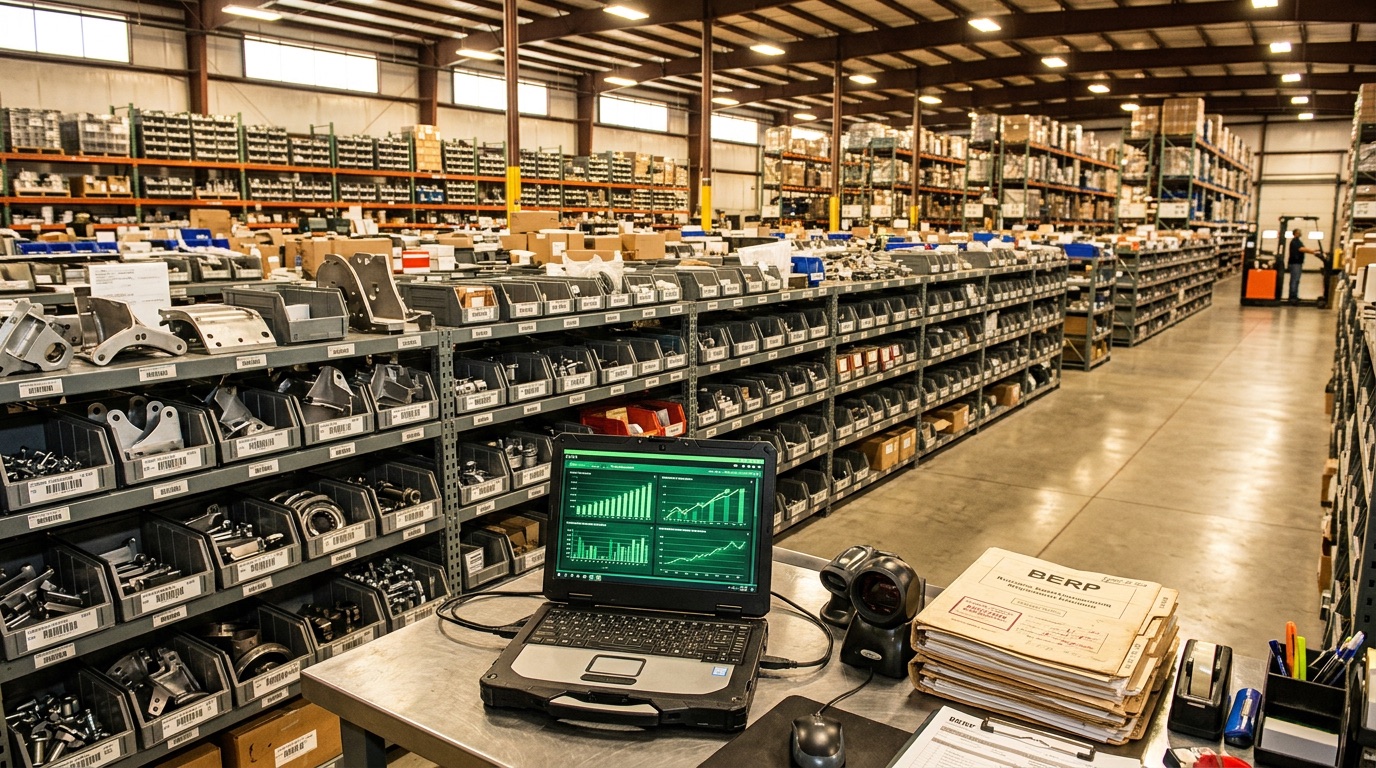
With BERP creation taking less time and attention, the ISR team has reclaimed significant capacity. That time is being redirected toward customer relationship-building and following up on pending approvals, which can help shorten the path from submission to revenue.
JPE's leadership pointed to this reallocation of sales time as the most important outcome of the work.
Key Learnings
1. Pair Your Subject Matter Expert with a Technical Operator
The breakthrough at JPE happened because the person who knows what a perfect BERP looks like (the Inside Sales Manager) was working alongside someone who could build the technical system (the BI Analyst). Neither could have done it alone. The BI Analyst's decision to move from a consumer app to a code-based system was the turning point. Not every company will have this person on staff. In those cases, the external partner fills the technical operator role during the sprint and trains an internal owner as part of the handoff.
2. Let AI Orchestrate; Let Code Execute
AI is good at reasoning and handling exceptions. It's not reliable for exact formatting or repetitive data entry. JPE's BI Analyst captured this well: "A lot of what we can do without AI, we're trying to do without AI now. It's actually just systematic, it's deterministic." Write code for the predictable parts. Use AI for everything else.
3. Voice Dictation Unlocks Expert Knowledge
The team used Wispr Flow to capture the subtle checks and judgment calls that experienced reps make automatically. Typing those out would take forever. Speaking them into the AI was fast and natural, and it gave the system the context it needed to handle edge cases.
4. Expect to Adapt
The first approach didn't work as planned. That's normal when you're applying new technology to a complex workflow. JPE succeeded because the team treated early setbacks as information, not failure. The willingness to shift from a desktop copilot to a code-based hybrid system is what turned an experiment into a production tool.
What They Said
"I did three BERPs at once... and the amount of changes I had to do was very minimal. I was pleasantly surprised that it was able to do that."
Inside Sales Manager, Jet Parts Engineering
"If AI is 95% accurate... each time it makes a decision it's going to be 95%. And that goes down very quickly, which is kind of why I went deterministic... A lot of what we can do without AI, we're trying to do without AI now."
Business Intelligence Analyst, Jet Parts Engineering
"The skill building was really kind of an eye opener to a lot of other things. It's made me feel a lot more comfortable with using it and talking with it and sort of iterating."
Inside Sales Manager, Jet Parts Engineering
"That is a huge time saver... we're not having to go in and find all this information and get it in there and it's not dedicated focus time."
Inside Sales Manager, Jet Parts Engineering